
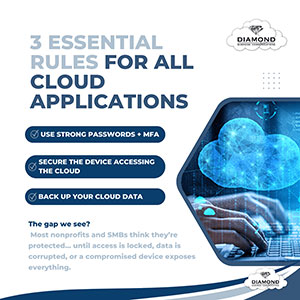
 If you’re using any kind of cloud application — and these days, almost everyone is — you’re right to be thinking about privacy and security. Cloud platforms promise convenience and flexibility, but there’s an uncomfortable truth many people overlook: most cloud breaches aren’t caused by the cloud provider… they’re caused by user error.
While the hosting company is responsible for securing their network, you are responsible for how you access and use the system. Here are three simple but critical steps you can take to protect your data.
1. Use Multifactor Authentication (MFA) + Strong Passwords
Your login credentials are the front door to your cloud data. That door should never be easy to break into.
Make sure you’re using:
- A password with at least eight characters
- Uppercase + lowercase letters
- Numbers and symbols
Avoid easy combinations like “Password123!” — hackers can crack those instantly. Pair your password with MFA, and you immediately make your account dramatically harder to compromise.
2. Secure the Device You’re Using
Even if your cloud account is locked down, your device might not be.
A secure cloud app can still be compromised if accessed from a computer that…
- Has outdated software
- Uses only basic antivirus
- Is also used for social media or personal email
- Lacks advanced monitoring or threat detection
This is where professional IT support matters. You need a strong, modern security stack on every device used for cloud access — not just a firewall and antivirus.
3. Back Up Your Cloud Data
Just because your data is stored “in the cloud” does not mean it’s backed up. Many businesses learn this the hard way. If your:
- Account is hacked
- Data becomes corrupted
- Cloud vendor locks your access
…your information could be gone for good.
Always download and store important cloud data in a separate, secure location. Redundancy is your best defense.
Protecting your cloud applications doesn’t require complicated tools — just consistent habits and the right safeguards.
🔐 Want help securing your cloud apps and devices? Book a free 10-minute discovery call with Diamond Business Communications today.
💡 Want more practical tips like this?
Stay one step ahead of hackers and cyberattacks by signing up for our free Cybersecurity Tip of the Week. Receive expert insights straight to your inbox and safeguard your business, customers, and reputation.
Subscribe here.