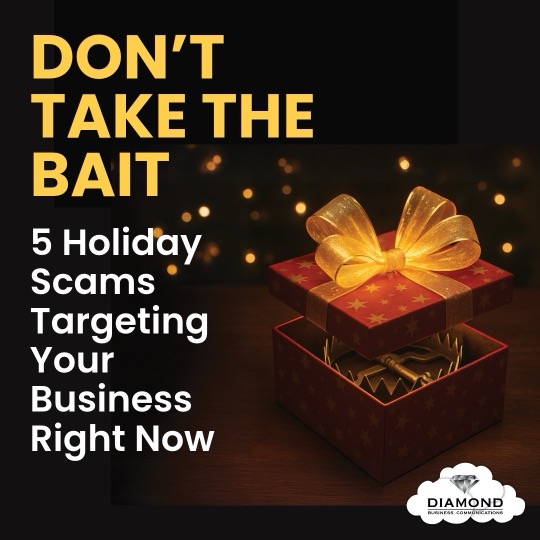
 You're the first line of defense against cyber threats, and cybercriminals know it. Between now and New Year's, your business faces a busy, distracted team, seasonal customers, year-end deadlines, and scammers counting on all three. November and December are consistently among the most profitable months of the year for scammers, because the holidays create exactly the conditions they need: urgency, volume, and people clicking first and thinking later.
The good news? With the right awareness and habits, your team can become a human firewall that stops attacks before they ever reach your network. Here are five threats that spike every holiday season, and how to make sure your business isn't the easy target.
Scam #1: The Fake "Holiday Bonus" Email
Every year around this time, employees receive emails that appear to come from the boss or the payroll department announcing a bonus or gift card. The email looks legitimate: right logo, right name, familiar tone. The catch? It asks the employee to "confirm their bank details" or click a link to "claim" the bonus.
One click, and the scammer has what they need to intercept a real payroll deposit or harvest login credentials. Remind your team now, before the season starts: your company will never ask for banking details over email. If a message about money seems out of the blue, verify it by phone, not by replying to the email.
The Too-Good-to-Be-True Black Friday Deal
Cyber Monday and Black Friday aren't just shopping events anymore. They're phishing campaigns with a countdown timer. Fake "flash sale" emails, counterfeit retail sites, and malicious ads spike dramatically in late November. Your employees are shopping on their work devices during lunch, and one bad click on a fake deal site can deliver malware straight into your network.
The rule for your team: if a deal looks impossible, it is. Shop on personal devices on personal time, and never enter work credentials anywhere a deal email sends you.
The Gift Card Con
This one targets the C-suite directly. An urgent email or text appears to come from the CEO or Executive Director: "I'm in a meeting. Can you run out and grab 20 gift cards for the staff? I'll reimburse you. Just send me the codes." It works because it exploits generosity and holiday spirit, and because it feels small enough not to verify.
No executive is ever in a meeting so important that they can't approve a gift card purchase through normal channels. A 30-second phone call stops this scam instantly. Make that your standing policy.
Fake Delivery and Shipping Notices
November kicks off the biggest shipping season of the year, and scammers ride along with it. "Your package is delayed, click to reschedule." "Customs needs additional payment." These messages carry real-looking logos and play on real anxiety about gifts arriving on time. The links lead to credential-harvesting pages designed to look like FedEx, UPS, and USPS.
If you're expecting something, track it in the carrier's own app, never from a link in a message.
The Year-End "Invoice" That Isn't
The last weeks of the year are prime time for fake invoices, because accounts payable is busy and volume is high. Scammers send plausible-looking bills for services you actually use (software renewals, IT support, advertising), hoping they slip through in the rush. Some even reference real vendor names.
Now is the time to tighten your accounts payable process. Verify any unexpected or changed invoice by calling a known number, and flag any request to change payment details on file.
The Pattern Behind All Five
Notice what every one of these scams has in common: urgency plus a request to click, pay, or share something. The holidays just dress them up in seasonal clothing. The defense isn't a new tool. It's a team that knows the pattern and pauses before acting.
Quick checks to share with your team this week:
- Confirm any money request by phone, using a number you already have
- Never enter work credentials through a link in an email or text
- Track deliveries in the carrier's own app
- Verify any changed payment details before paying
Keep Your Holidays Secure, Not Stressful
That's exactly what security awareness training builds. If your staff hasn't been trained this quarter, the holiday season is the worst possible time to find out why it matters.
Want to keep your team cyber-aware and cyber-resilient? Book your FREE 15-minute Discovery Call today HERE.
Unlike our competitors, our training is engaging, memorable, and informative, like a mini-Netflix series that won't bore your staff to death. What they learn actually sticks.
Because the strongest firewall your business has is a team that knows how to pause.